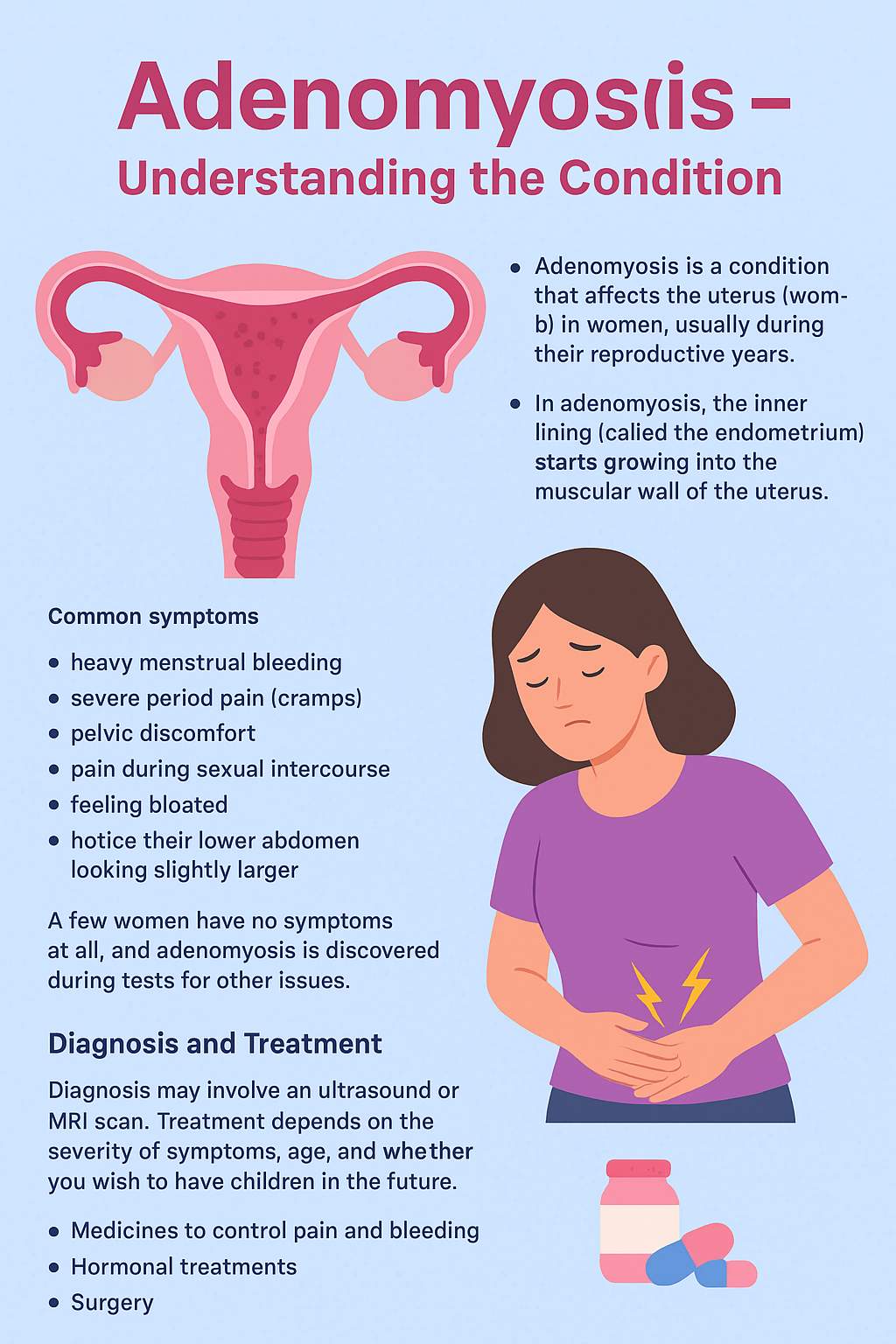
Common symptoms include heavy menstrual bleeding, severe period pain (cramps), pelvic discomfort, and sometimes pain during sexual intercourse. Some women may also feel bloated or notice their lower abdomen looking slightly bigger. However, a few women have no symptoms at all, and adenomyosis is discovered during tests for other issues.
The exact cause is not fully understood, but hormonal changes, childbirth, or uterine surgeries may play a role. It is not cancer, but it can significantly affect quality of life.
Diagnosis may involve an ultrasound or MRI scan. Treatment depends on the severity of symptoms, age, and whether you wish to have children in the future. Options include medicines to control pain and bleeding, hormonal treatments, or in severe cases, surgery.
If you have heavy, painful periods that interfere with your daily activities, speak to your doctor for proper evaluation and management.