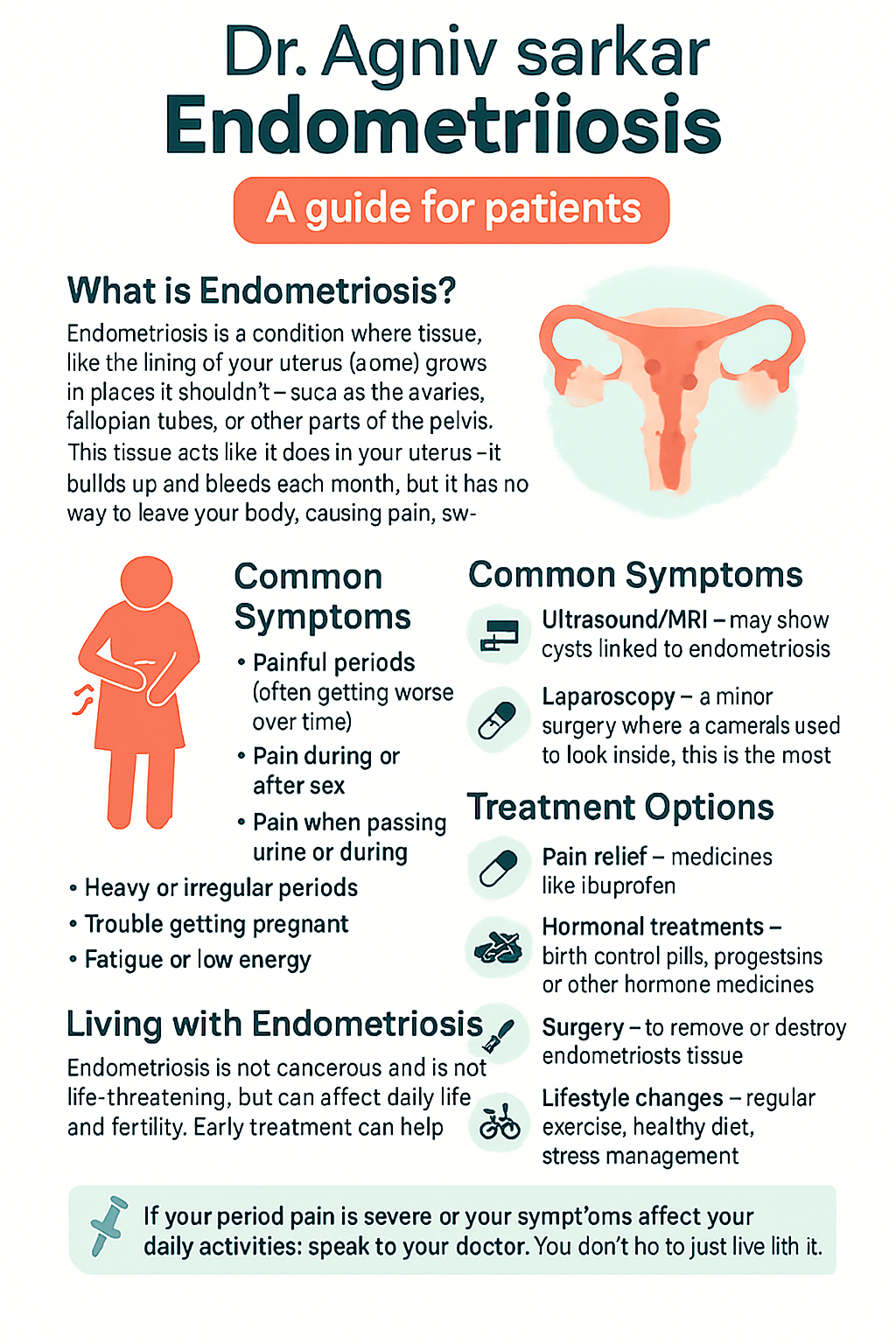
Endometriosis – Understanding the Condition

Endometriosis is a condition where tissue similar to the lining of the uterus (womb) grows outside it, such as on the ovaries, fallopian tubes, or other pelvic organs. This tissue behaves like the normal lining – it thickens and bleeds with each menstrual cycle – but the blood has no way to leave the body. This can cause pain, swelling, and sometimes the formation of cysts or scar tissue.

The most common symptom is pelvic pain, especially during periods. Some women may also have pain during intercourse, difficulty getting pregnant, heavy periods, or pain while passing urine or stools during menstruation. However, symptoms can vary from mild to severe, and some women may have no symptoms at all.

The exact cause is not fully known, but factors like genetics, hormonal influences, and immune system problems may play a role.

Endometriosis is not cancer and is not life-threatening, but it can affect daily life and fertility. Diagnosis usually involves an ultrasound or, in some cases, a laparoscopy (keyhole surgery).

Treatment options include pain relief medicines, hormone therapy, or surgery, depending on severity and future pregnancy plans. With timely diagnosis and management, most women can live healthy, active lives.
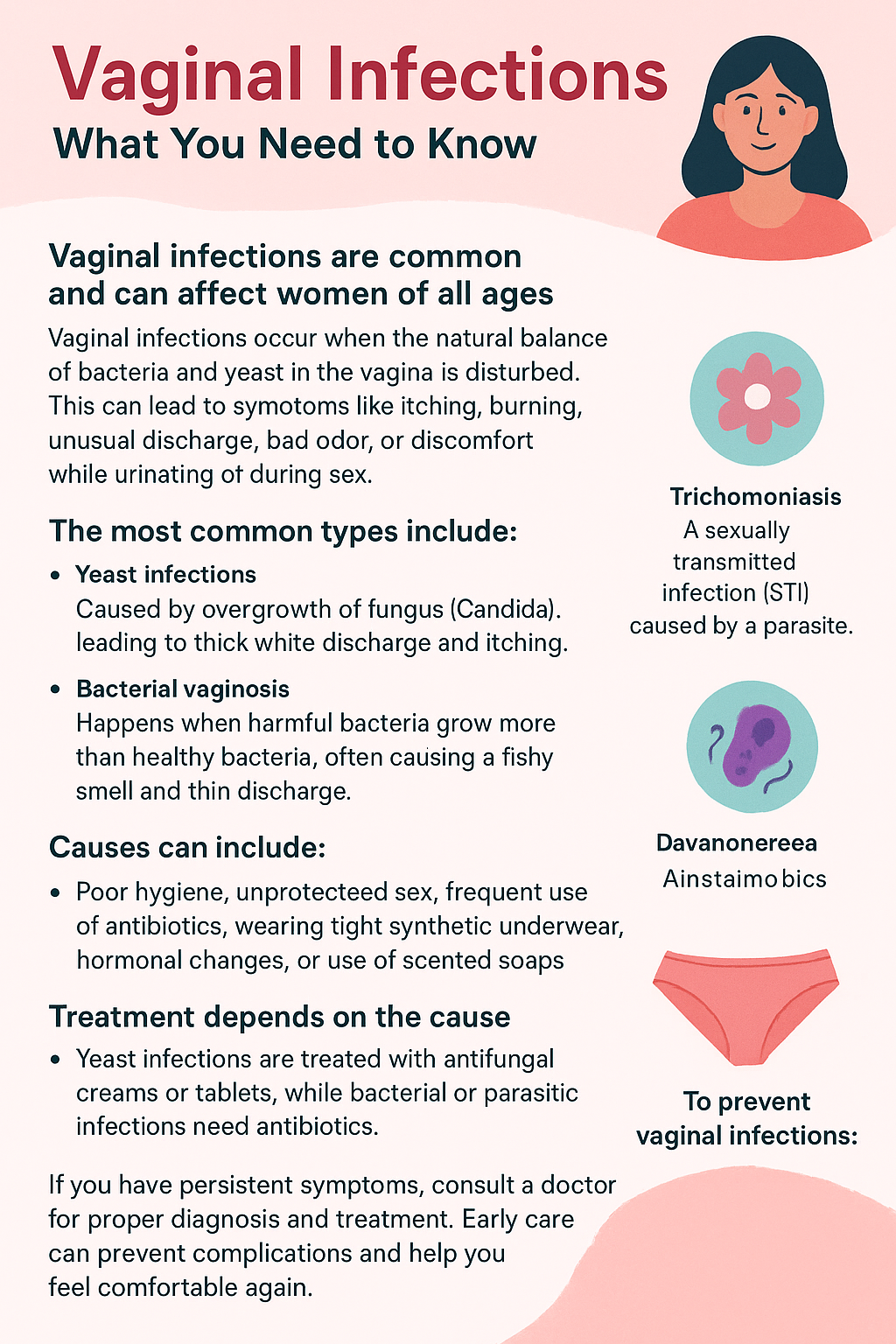
Vaginal Infections – What You Need to Know

Vaginal infections are common and can affect women of all ages. They occur when the natural balance of bacteria and yeast in the vagina is disturbed. This can lead to symptoms like itching, burning, unusual discharge, bad odor, or discomfort while urinating or during sex. The most common types include:

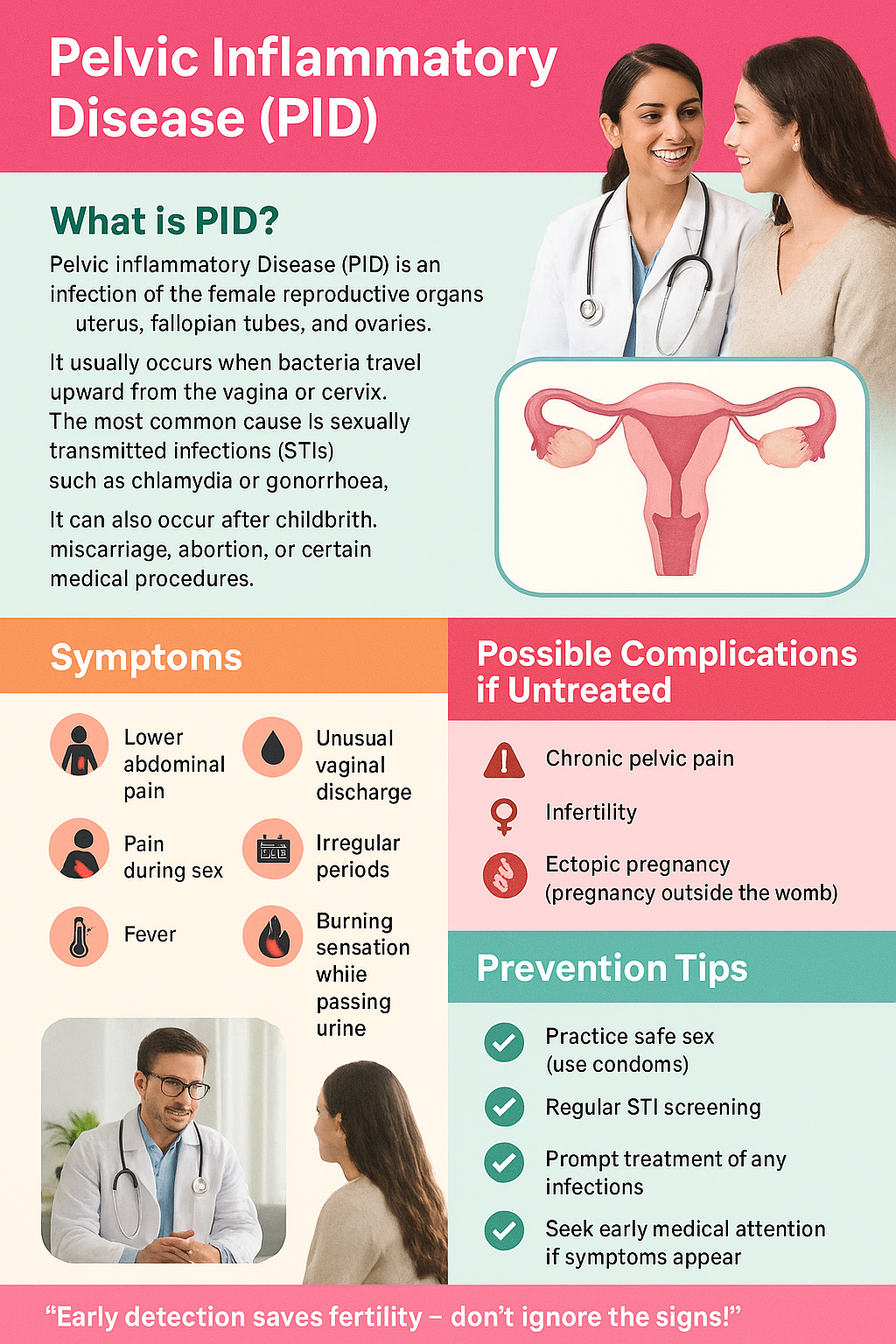
Pelvic Inflammatory Disease (PID)

Pelvic Inflammatory Disease (PID) is an infection of a woman’s reproductive organs, including the uterus, fallopian tubes, and ovaries. It usually happens when bacteria travel upward from the vagina or cervix. The most common cause is sexually transmitted infections (STIs) like chlamydia or gonorrhoea, but it can also occur after

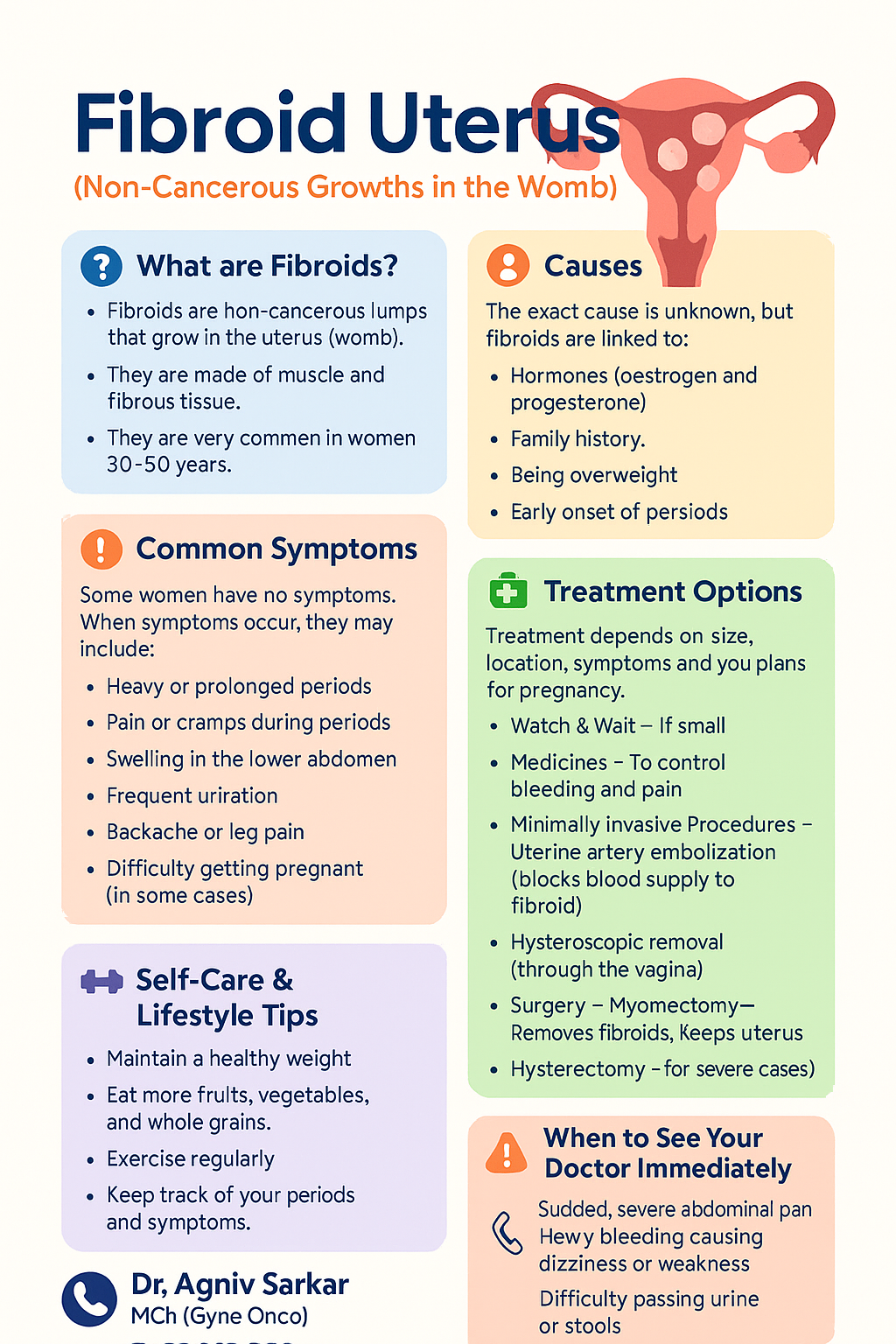
Fibroid Uterus – Understanding the Basics

Fibroids are non-cancerous growths that develop in the muscle wall of the uterus (womb). They are very common in women of reproductive age, especially between 30 and 50 years. Fibroids can be of different sizes – from very small to quite large – and a woman may have one or