It is more common in women who have had multiple normal deliveries, are post-menopausal, or have conditions that increase pressure on the abdomen, such as chronic cough, constipation, or heavy lifting.
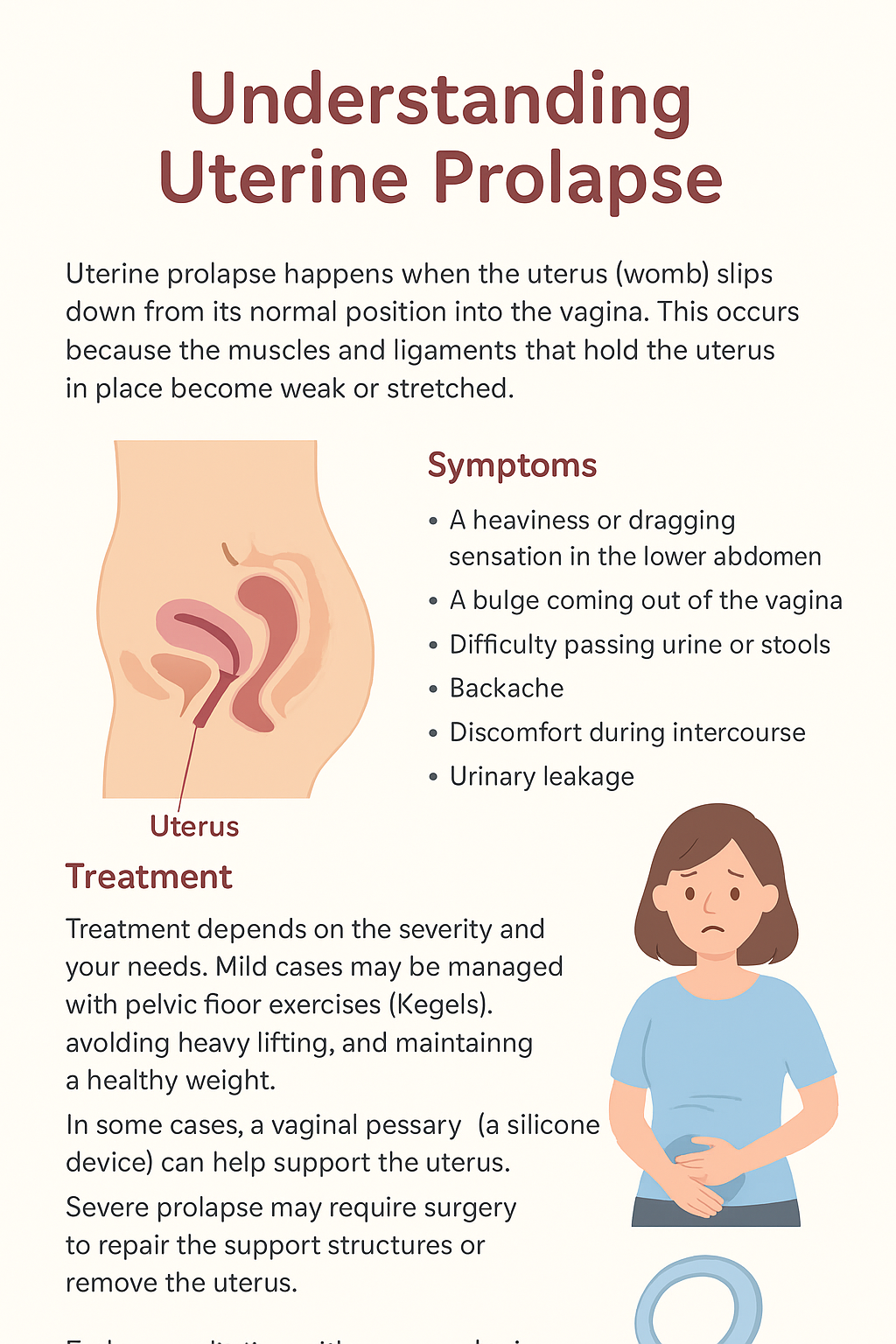
Symptoms can vary. Some women may feel a heaviness or dragging sensation in the lower abdomen, notice a bulge coming out of the vagina, or have difficulty passing urine or stools. Backache, discomfort during intercourse, and urinary leakage can also occur.
Uterine prolapse is not life-threatening, but it can affect your comfort and quality of life. Diagnosis is usually made during a gynecological examination.
Treatment depends on the severity and your needs. Mild cases may be managed with pelvic floor exercises (Kegels), avoiding heavy lifting, and maintaining a healthy weight. In some cases, a vaginal pessary (a silicone device) can help support the uterus. Severe prolapse may require surgery to repair the support structures or remove the uterus.
Early consultation with a gynecologist can help prevent worsening and guide the best treatment for you.