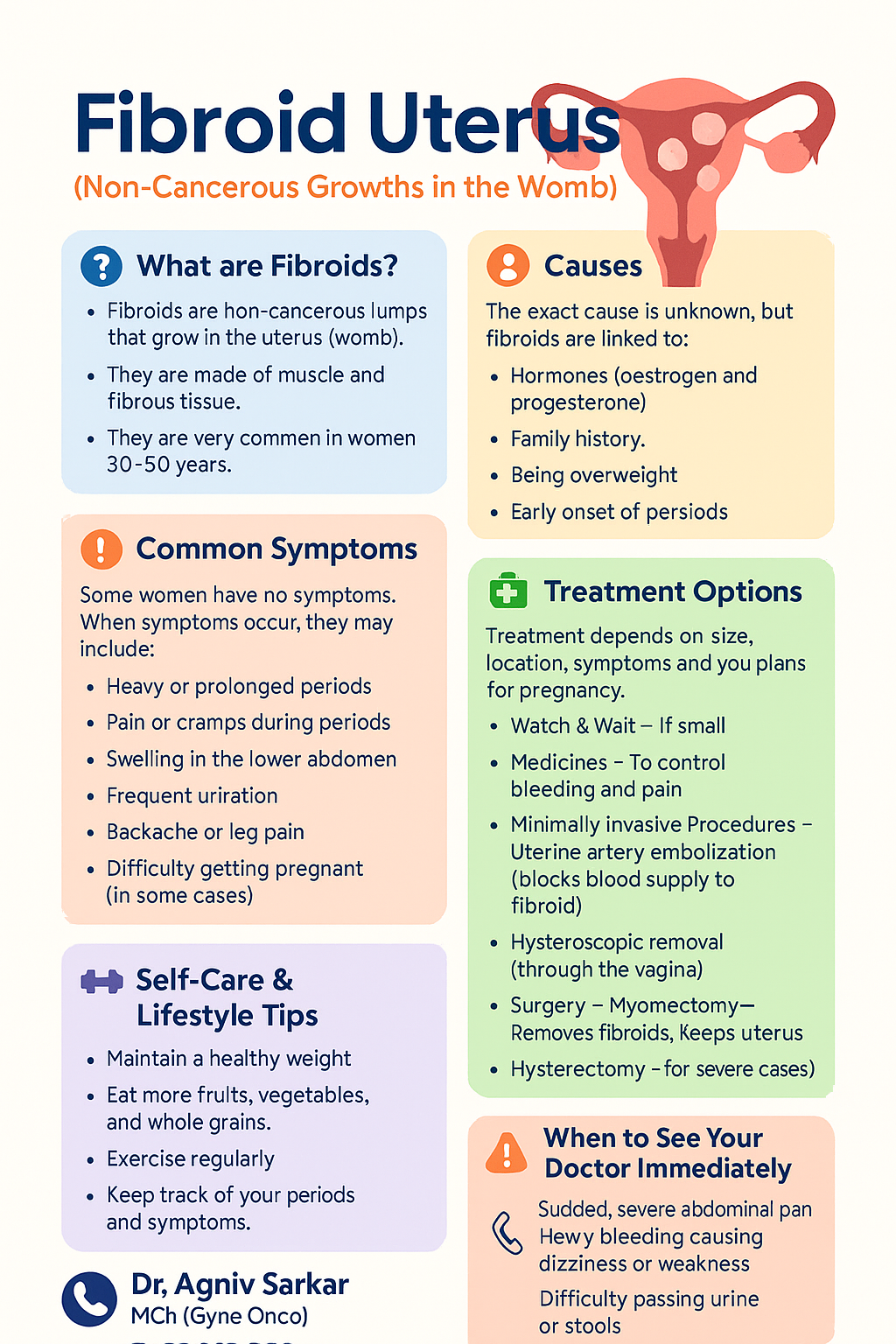
Fibroid Uterus – Understanding the Basics

Fibroids are non-cancerous growths that develop in the muscle wall of the uterus (womb). They are very common in women of reproductive age, especially between 30 and 50 years. Fibroids can be of different sizes – from very small to quite large – and a woman may have one or many.

The exact cause of fibroids is not known, but they are linked to hormones (oestrogen and progesterone) and may run in families. Most fibroids do not cause problems and are found during routine check-ups. However, some women may experience symptoms like heavy or prolonged periods, pelvic pain or pressure, frequent urination, constipation, or difficulty getting pregnant.

Diagnosis is usually made through an ultrasound. Treatment depends on the size, number of fibroids, symptoms, and whether the woman wishes to have children in the future. Options include medicines to control bleeding and pain, procedures to shrink the fibroids, or surgery to remove them.

Fibroids are not cancer and rarely turn into cancer. Many women live with fibroids without any issues. If you have symptoms affecting your daily life, it’s important to consult your doctor for the best treatment plan. Early attention can help you stay healthy and comfortable.
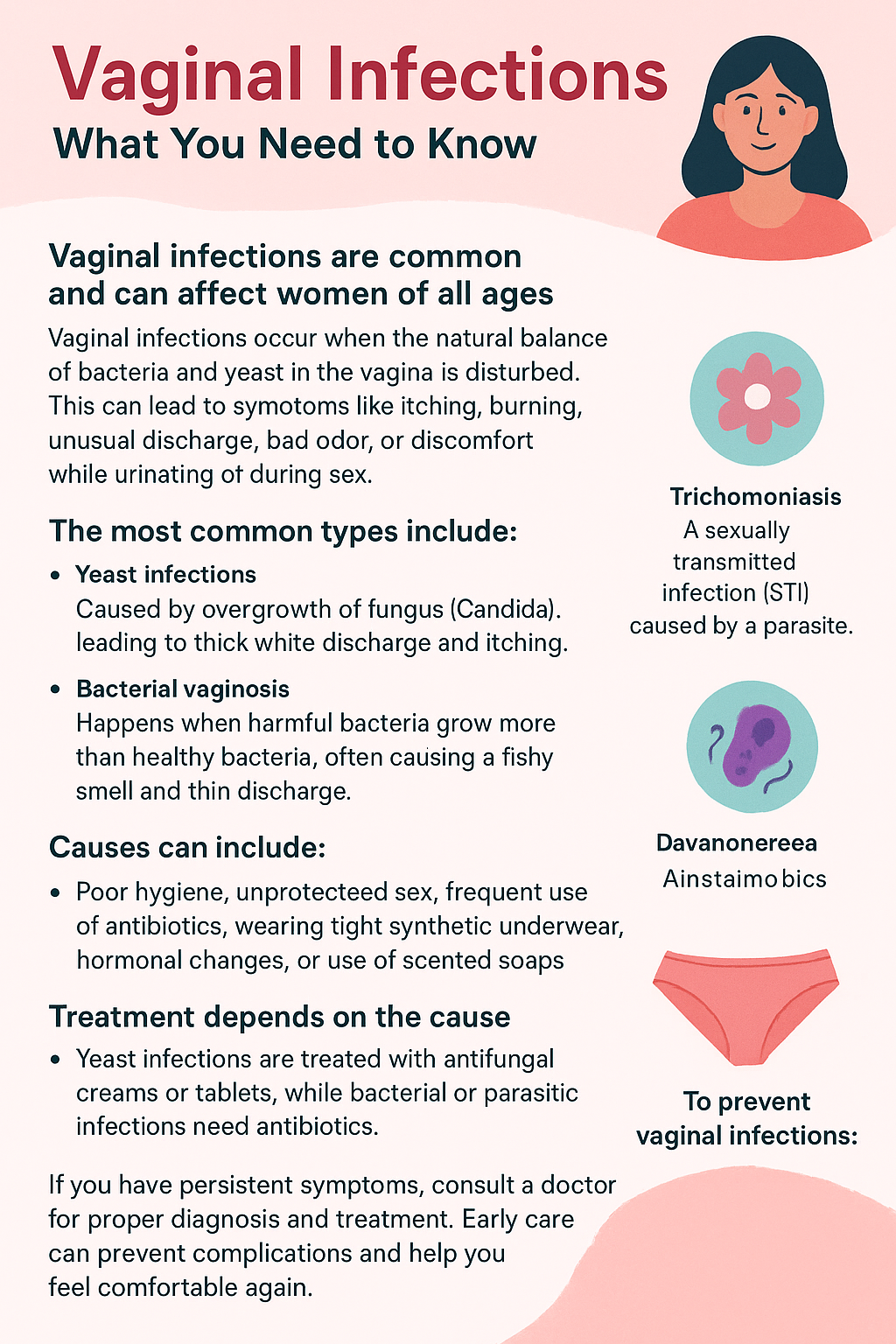
Vaginal Infections – What You Need to Know

Vaginal infections are common and can affect women of all ages. They occur when the natural balance of bacteria and yeast in the vagina is disturbed. This can lead to symptoms like itching, burning, unusual discharge, bad odor, or discomfort while urinating or during sex. The most common types include:

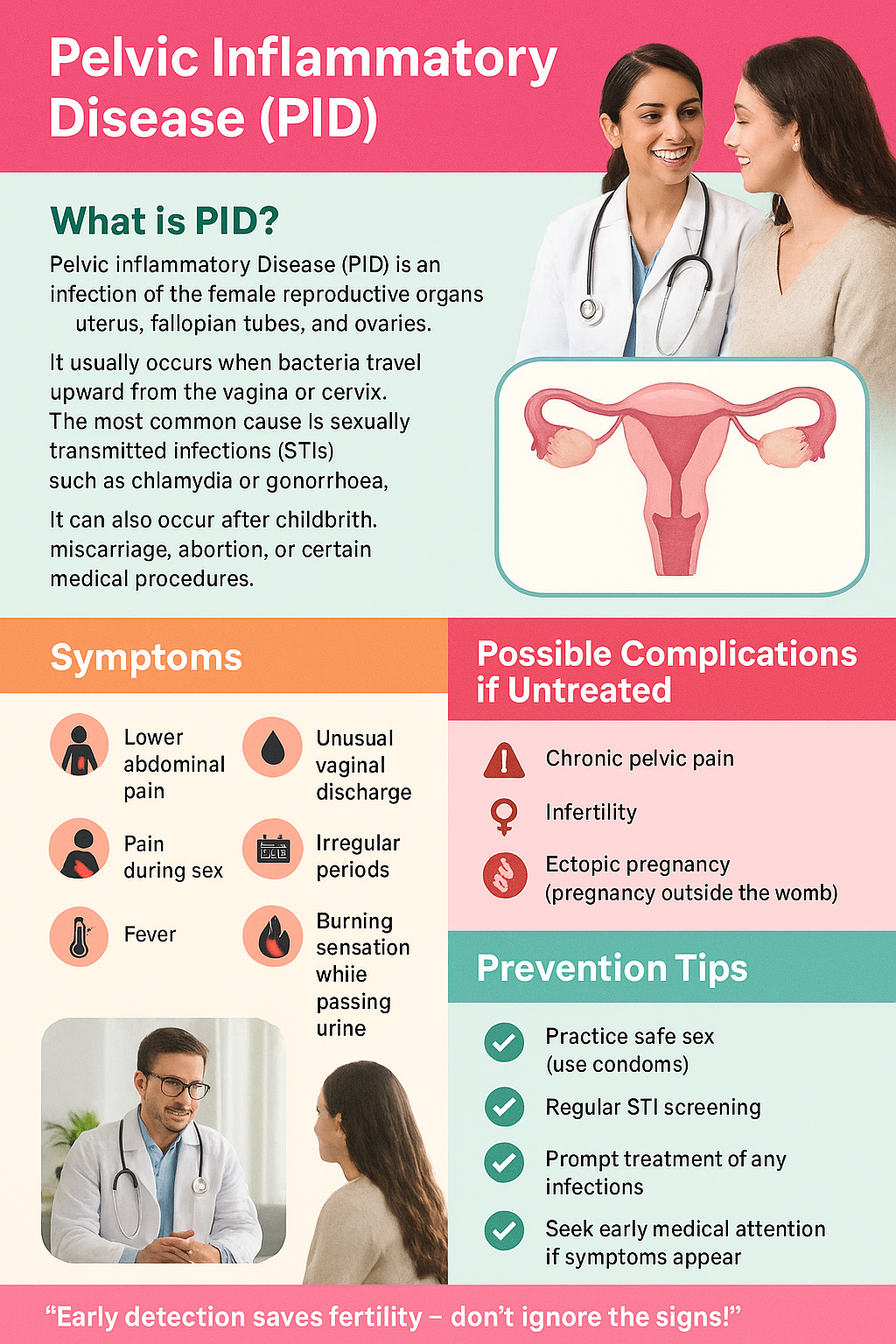
Pelvic Inflammatory Disease (PID)

Pelvic Inflammatory Disease (PID) is an infection of a woman’s reproductive organs, including the uterus, fallopian tubes, and ovaries. It usually happens when bacteria travel upward from the vagina or cervix. The most common cause is sexually transmitted infections (STIs) like chlamydia or gonorrhoea, but it can also occur after

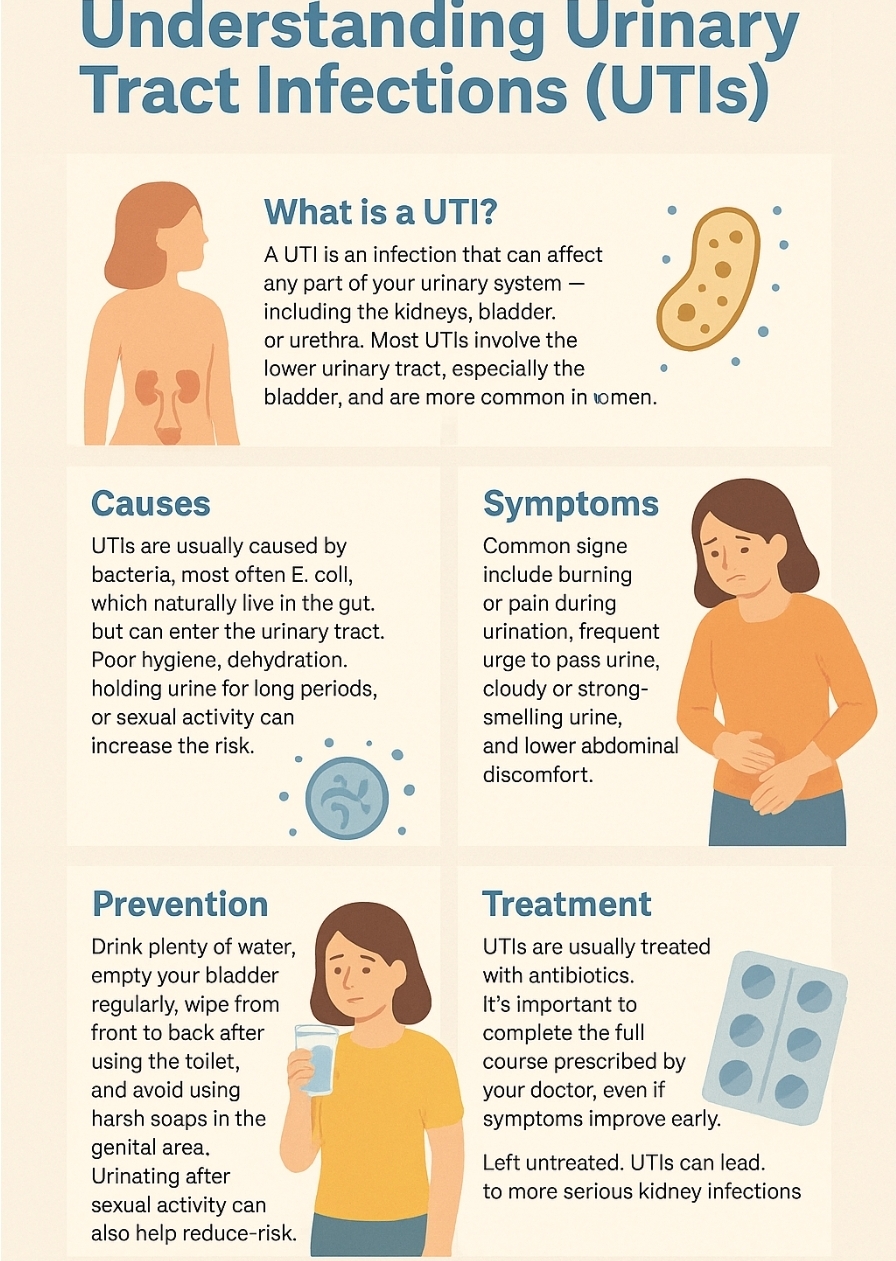
Understanding Urinary Tract Infections (UTIs)

A urinary tract infection (UTI) is an infection that can affect any part of your urinary system — including the kidneys, bladder, or urethra. Most UTIs involve the lower urinary tract, especially the bladder, and are more common in women. Causes: UTIs are usually caused by bacteria, most often E.