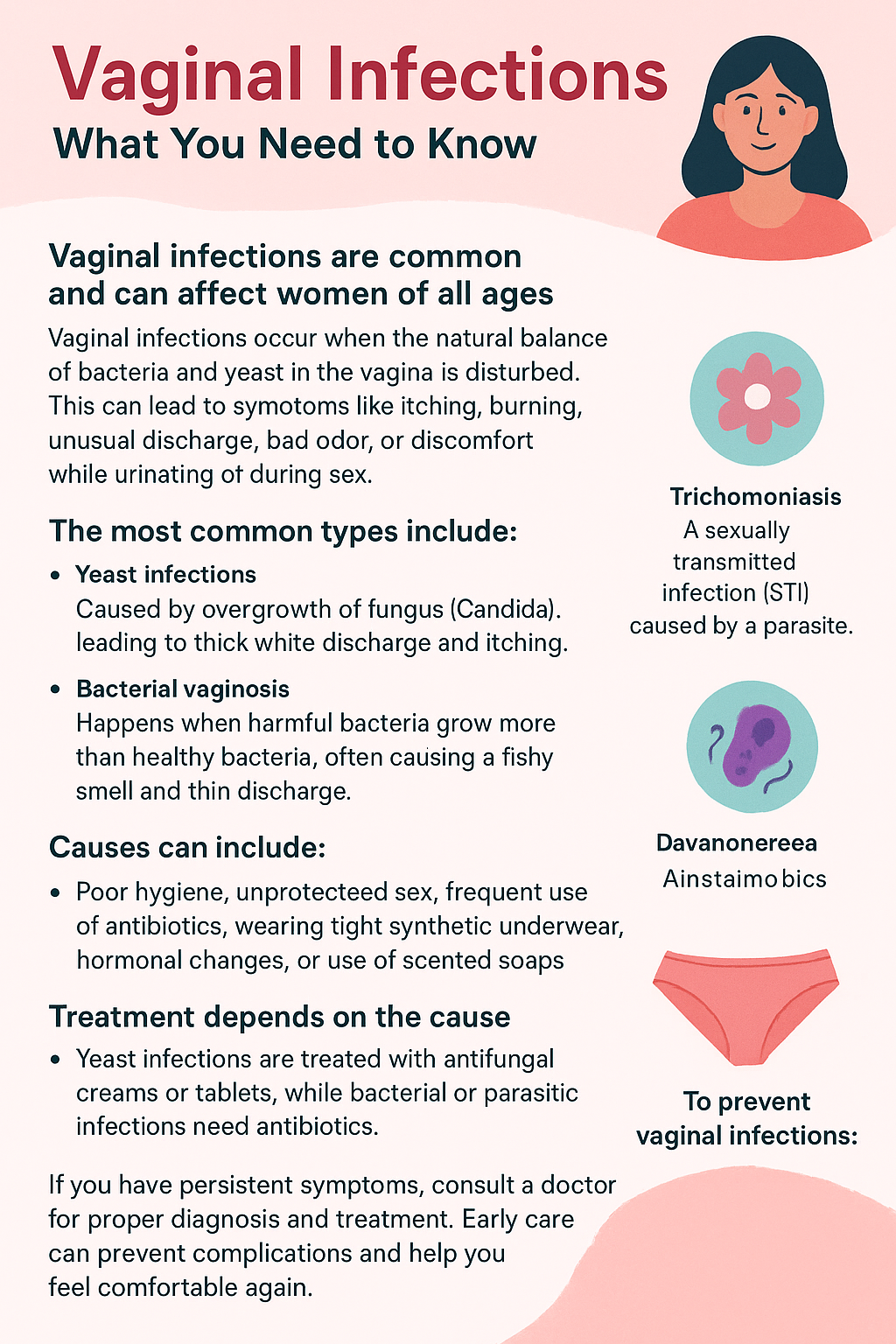
Vaginal infections are common and can affect women of all ages. They occur when the natural balance of bacteria and yeast in the vagina is disturbed. This can lead to symptoms like itching, burning, unusual discharge, bad odor, or discomfort while urinating or during sex.
The most common types include:
- Yeast infections– caused by overgrowth of fungus (Candida), leading to thick white discharge and itching.
- Bacterial vaginosis– happens when harmful bacteria grow more than healthy bacteria, often causing a fishy smell and thin discharge.
- Trichomoniasis– a sexually transmitted infection (STI) caused by a parasite, leading to yellow-green discharge and irritation.
Causes can include poor hygiene, unprotected sex, frequent use of antibiotics, wearing tight synthetic underwear, hormonal changes, or use of scented soaps and sprays.
Treatment depends on the cause. Yeast infections are treated with antifungal creams or tablets, while bacterial or parasitic infections need antibiotics.
To prevent vaginal infections:
- Maintain good hygiene
- Wear cotton underwear
- Avoid douching and scented products
- Practice safe sex
If you have persistent symptoms, consult a doctor for proper diagnosis and treatment. Early care can prevent complications and help you feel comfortable again.