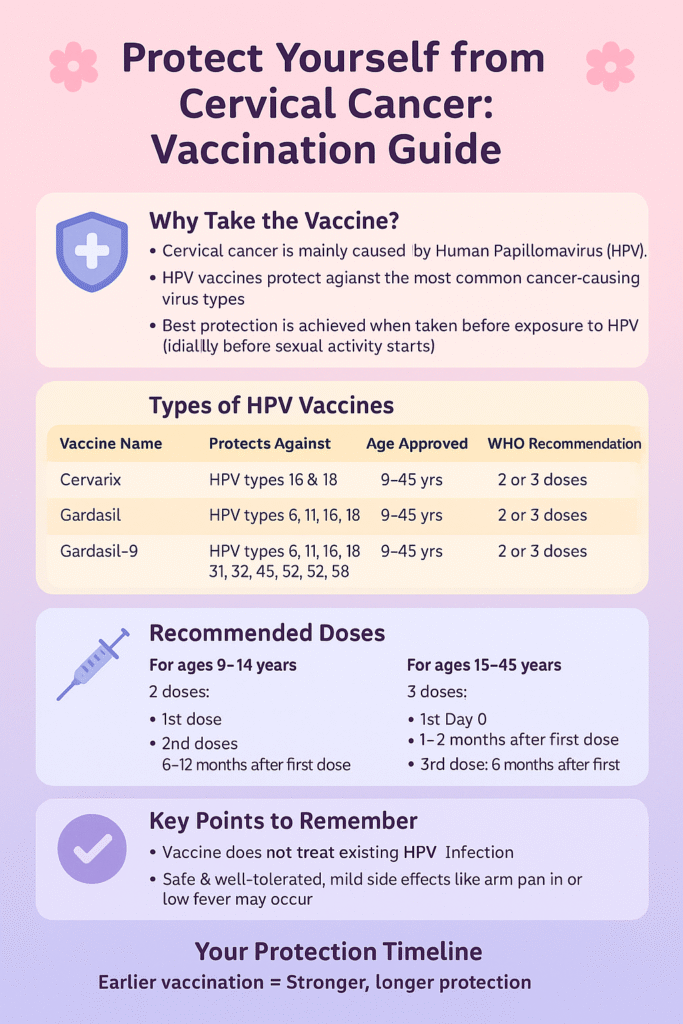
HPV Vaccination – Protecting Against Cervical Cancer

The Human Papillomavirus (HPV) is a very common virus that spreads through skin-to-skin contact during sexual activity. Most people get infected at some point in their lives without even knowing it. While many HPV infections go away on their own, some types can cause serious health problems like cervical cancer, genital warts, and cancers of the vagina, vulva, penis, anus, and throat.

The good news is that HPV infection can be prevented with a safe and effective vaccine. HPV vaccination works best when given before a person is exposed to the virus – ideally in the early teenage years. The World Health Organization recommends vaccination for girls (and boys) between the ages of 9 and 14. However, young adults can also benefit from it.

The vaccine is usually given as two or three doses over a few months. It helps the body develop strong protection against the harmful HPV types that cause most cervical cancers.

HPV vaccination is a simple step that can save lives. Combined with regular cervical cancer screening later in life, it offers powerful protection for women’s health. Talk to your doctor today about getting vaccinated for yourself or your child. Prevention is always better than cure.
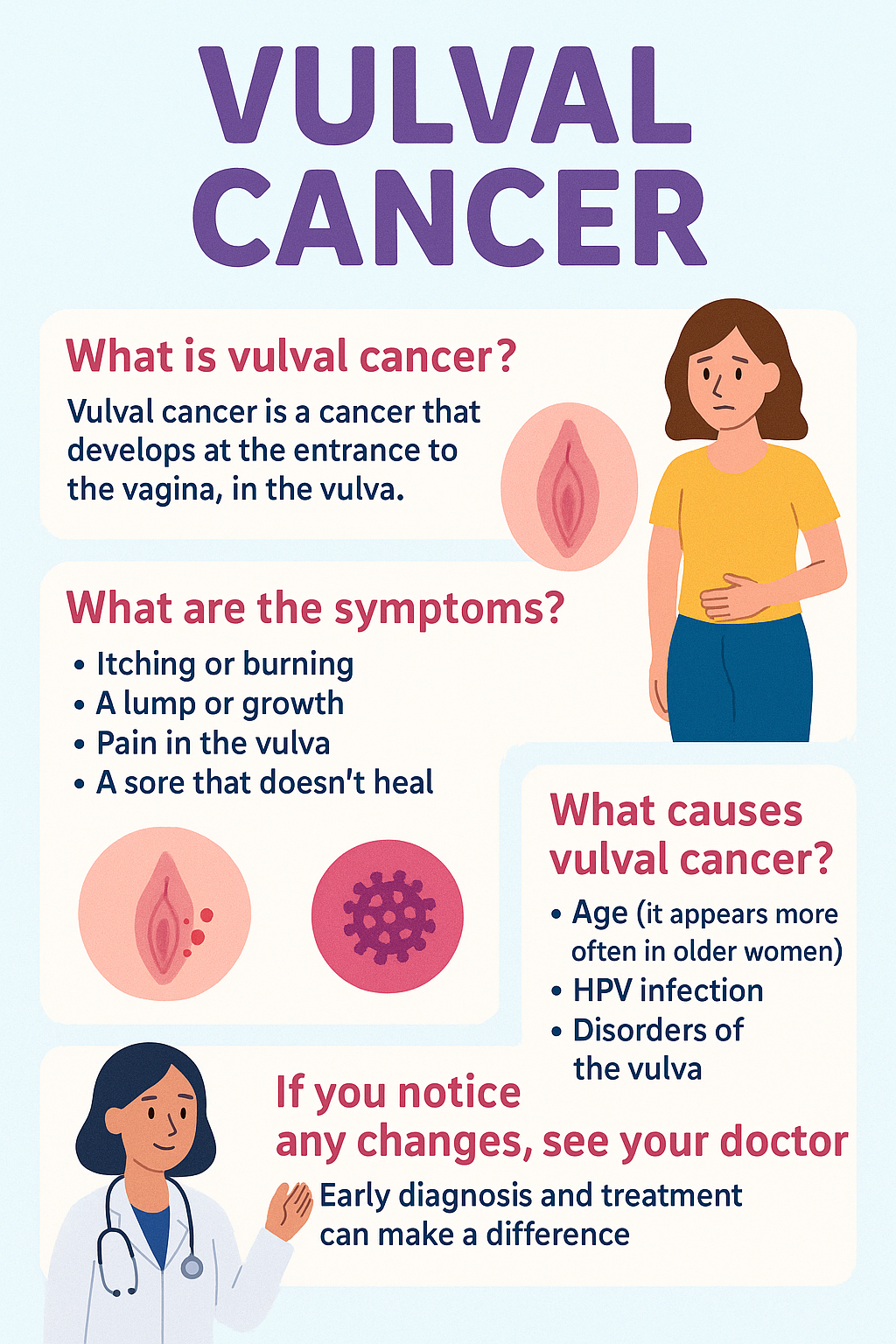
Vulval Cancer – Understanding the Basics

Vulval cancer is an uncommon type of cancer that develops on the outer part of the female genital area, called the vulva. This area includes the skin around the opening of the vagina, the inner and outer lips (labia), and the clitoris. It most often affects women after menopause, but

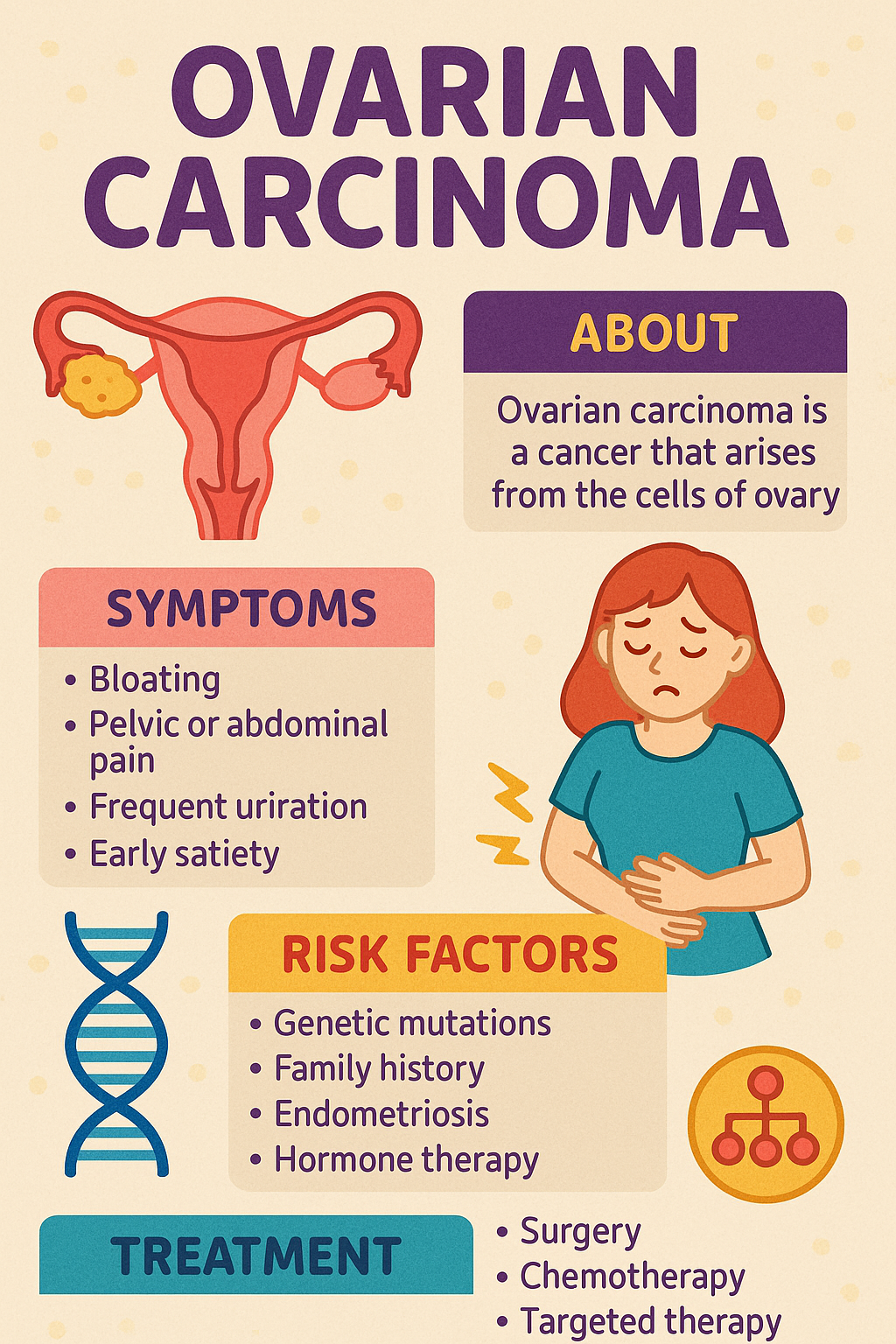
Ovarian cancer

Ovarian cancer is a type of cancer that starts in a woman’s ovaries, the small organs that produce eggs and female hormones. It is often called a “silent killer” because it usually develops without clear symptoms in the early stages, making it difficult to detect. The exact cause is unknown,

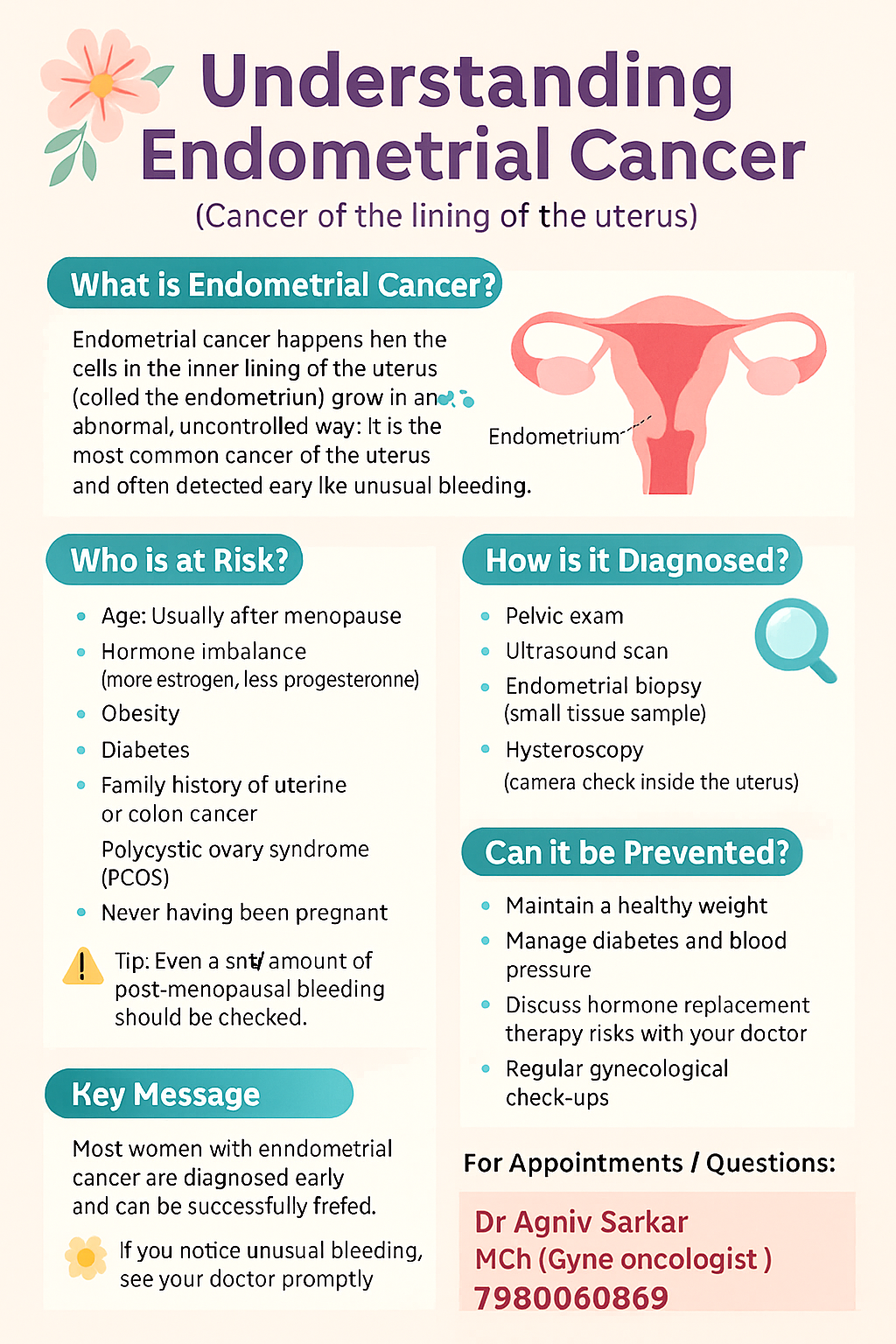
Endometrial Cancer

Endometrial cancer is a type of cancer that starts in the lining of the uterus, called the endometrium. It is the most common cancer of the female reproductive system, usually affecting women after menopause, though it can occur earlier. The main symptom is abnormal vaginal bleeding — especially bleeding after