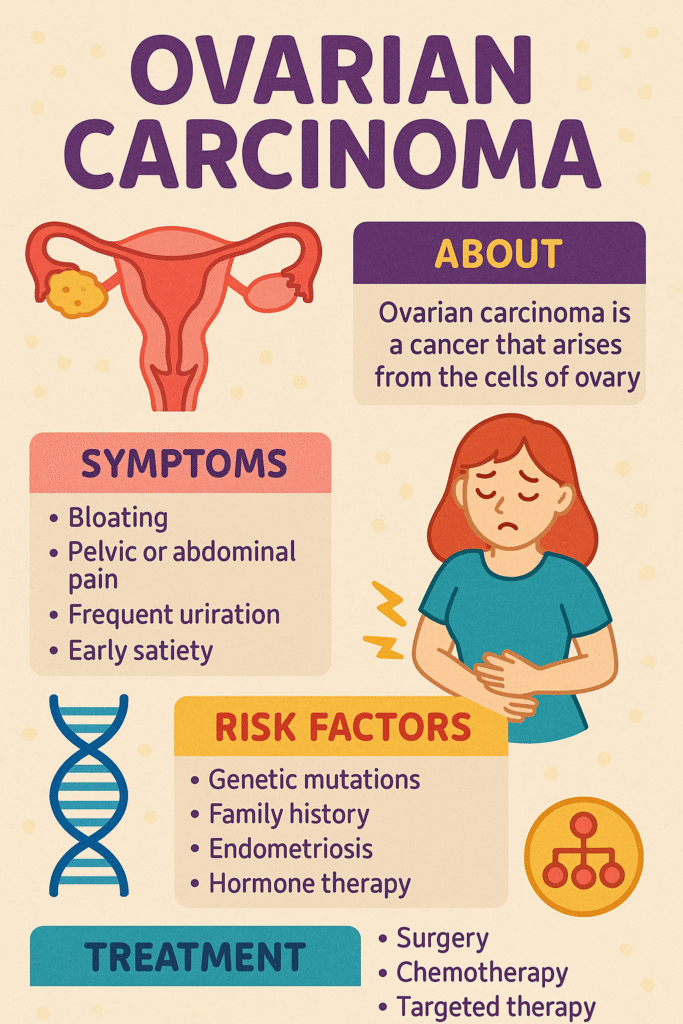
Ovarian cancer is a type of cancer that starts in a woman’s ovaries, the small organs that produce eggs and female hormones. It is often called a “silent killer” because it usually develops without clear symptoms in the early stages, making it difficult to detect.
The exact cause is unknown, but factors like increasing age, family history of ovarian or breast cancer, certain genetic changes (such as BRCA mutations), and never having been pregnant can increase risk.
Early symptoms may be vague and include bloating, pelvic or abdominal pain, feeling full quickly while eating, and frequent urination. These signs are often mistaken for common digestive or urinary problems, leading to delayed diagnosis.
Diagnosis involves pelvic examination, ultrasound, and blood tests such as CA-125. In some cases, surgery or biopsy is needed to confirm the cancer type and stage.
Treatment depends on the stage and usually includes surgery to remove the cancer and surrounding tissues, followed by chemotherapy. In advanced cases, targeted therapy may also be used.
Regular check-ups and being alert to persistent symptoms can help detect the disease earlier. Women with a strong family history should discuss genetic testing with their doctor for better prevention and monitoring.
The exact cause is unknown, but factors like increasing age, family history of ovarian or breast cancer, certain genetic changes (such as BRCA mutations), and never having been pregnant can increase risk.
Early symptoms may be vague and include bloating, pelvic or abdominal pain, feeling full quickly while eating, and frequent urination. These signs are often mistaken for common digestive or urinary problems, leading to delayed diagnosis.
Diagnosis involves pelvic examination, ultrasound, and blood tests such as CA-125. In some cases, surgery or biopsy is needed to confirm the cancer type and stage.
Treatment depends on the stage and usually includes surgery to remove the cancer and surrounding tissues, followed by chemotherapy. In advanced cases, targeted therapy may also be used.
Regular check-ups and being alert to persistent symptoms can help detect the disease earlier. Women with a strong family history should discuss genetic testing with their doctor for better prevention and monitoring.