Pelvic Inflammatory Disease (PID)

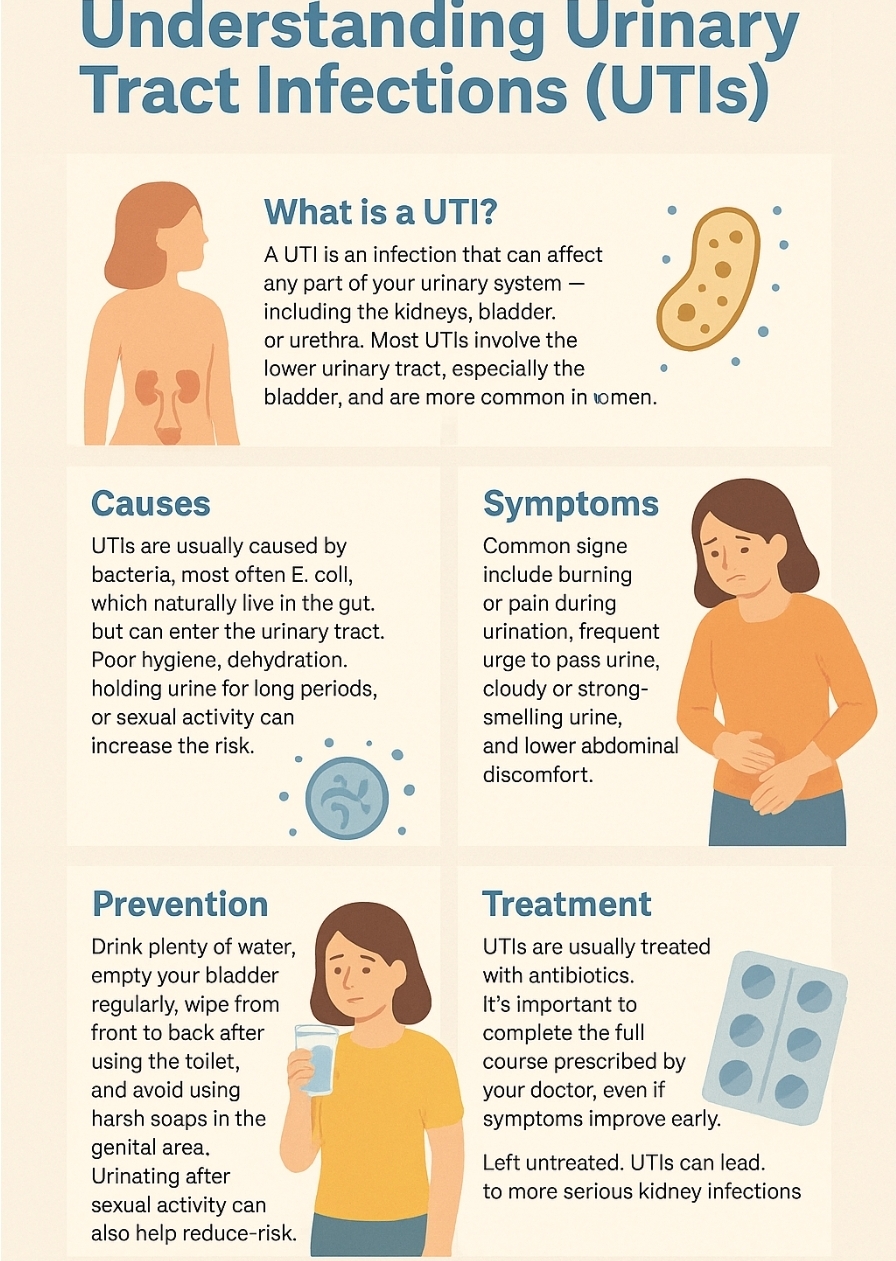
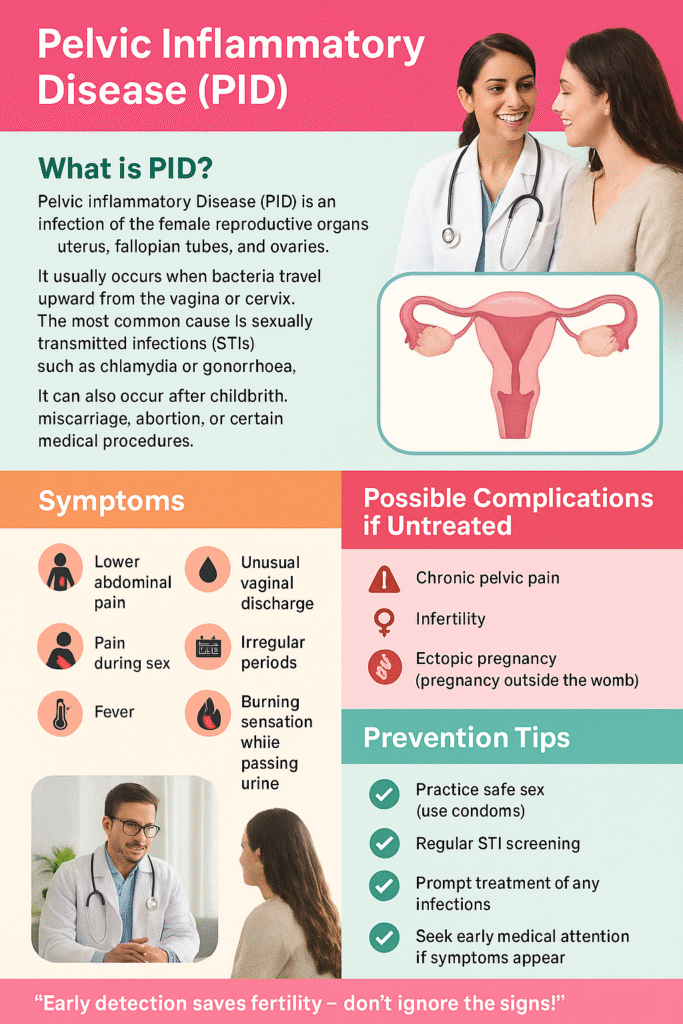
Pelvic Inflammatory Disease (PID) is an infection of a woman’s reproductive organs, including the uterus, fallopian tubes, and ovaries. It usually happens when bacteria travel upward from the vagina or cervix. The most common cause is sexually transmitted infections (STIs) like chlamydia or gonorrhoea, but it can also occur after childbirth, miscarriage, abortion, or medical procedures involving the uterus.

Symptoms of PID may include lower abdominal pain, unusual vaginal discharge, pain during sex, irregular periods, fever, or burning sensation while passing urine. However, some women may have mild or no symptoms, making it easy for the condition to go unnoticed.

If left untreated, PID can cause serious complications such as chronic pelvic pain, infertility, and ectopic pregnancy (pregnancy outside the womb).

Diagnosis is based on symptoms, physical examination, and sometimes laboratory tests or ultrasound. Treatment involves antibiotics to clear the infection. In severe cases, hospitalization may be needed.

Prevention includes practising safe sex (using condoms), regular STI screening, and prompt treatment of any infections. Women should seek medical attention early if they have symptoms, as timely treatment can prevent long-term damage and protect reproductive health. Early awareness is key to avoiding complications from PID.
Vaginal Infections – What You Need to Know

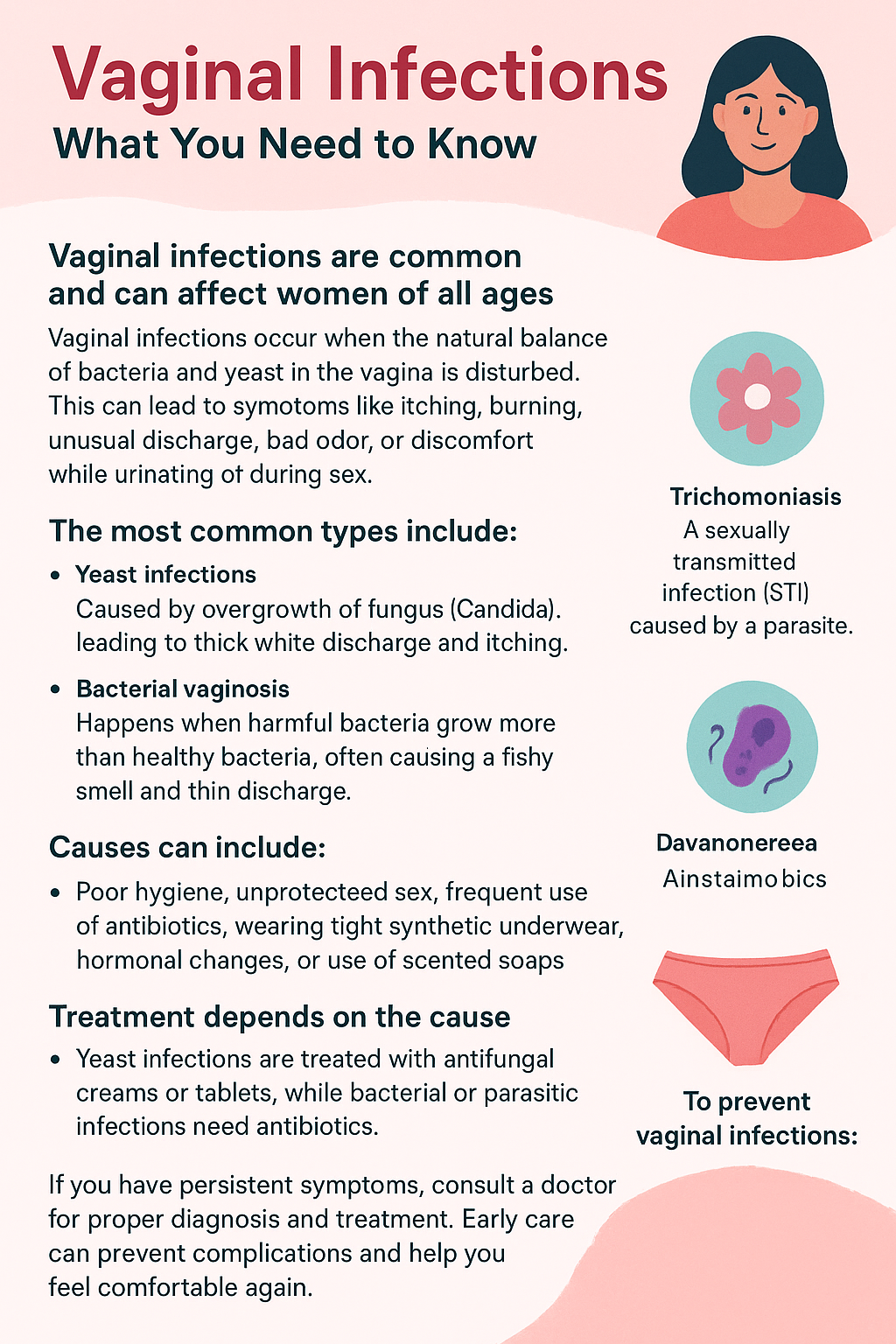
Vaginal infections are common and can affect women of all ages. They occur when the natural balance of bacteria and yeast in the vagina is disturbed. This can lead to symptoms like itching, burning, unusual discharge, bad odor, or discomfort while urinating or during sex. The most common types include:

Fibroid Uterus – Understanding the Basics

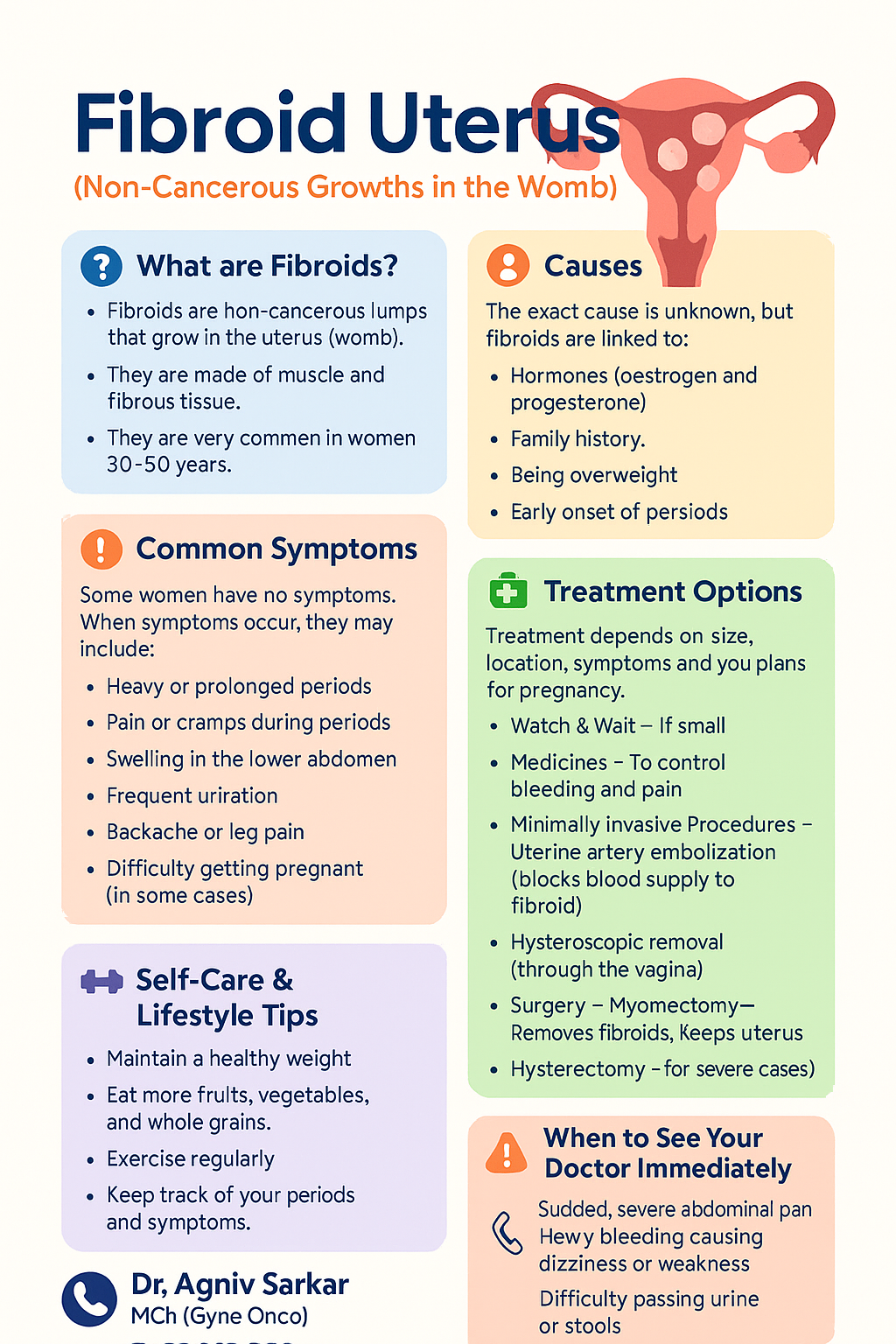
Fibroids are non-cancerous growths that develop in the muscle wall of the uterus (womb). They are very common in women of reproductive age, especially between 30 and 50 years. Fibroids can be of different sizes – from very small to quite large – and a woman may have one or

Understanding Urinary Tract Infections (UTIs)

A urinary tract infection (UTI) is an infection that can affect any part of your urinary system — including the kidneys, bladder, or urethra. Most UTIs involve the lower urinary tract, especially the bladder, and are more common in women. Causes: UTIs are usually caused by bacteria, most often E.